
Clean Rooms
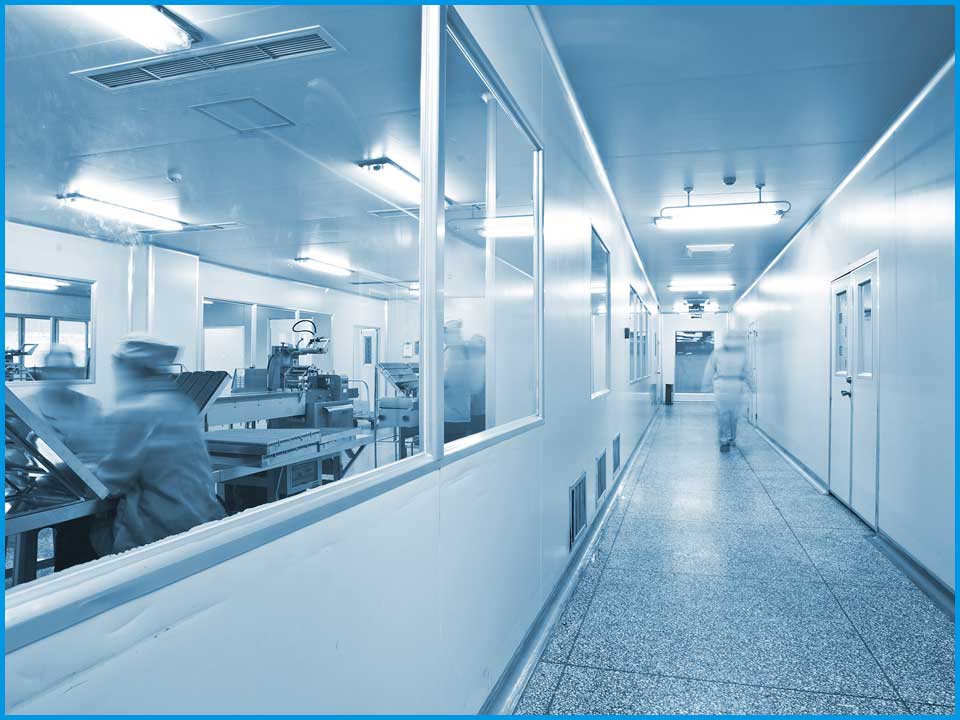
A cleanroom is a highly controlled environment engineered to maintain extremely low levels of airborne contaminants like dust, microbes, and vaporized particles. These spaces regulate airflow, temperature, humidity, and pressure to prevent contamination in sensitive industries such as pharmaceuticals, biotechnology, and semiconductor manufacturing.
Key Characteristics and Components
- Contamination Control: Designed to minimize the generation, retention, and introduction of particles.
- Filtration: Utilizes High-Efficiency Particulate Air (HEPA) or Ultra-Low Penetration Air (ULPA) filters to cleanse the air.
- Airflow: Uses laminar or unidirectional airflow to constantly sweep particles away from sensitive work areas.
- Controlled Parameters: Strict regulation of temperature, humidity, and pressure to ensure optimal conditions.
- Structural Materials: Constructed using non-shedding, easy-to-clean materials, often featuring epoxy floors and sealed, flush-mounted lights.
Classifications (ISO 14644-1)
Cleanrooms are classified by the number of particles allowed per cubic meter, ranging from ISO 1 (most clean) to ISO 9 (typical room air).
- ISO 5: Features 250-300 HEPA-filtered air changes per hour.
- ISO 7: Commonly used for medical device manufacturing and pharmaceutical filling.
Common Applications
- Pharmaceuticals & Biotech: Sterile compounding and drug manufacturing.
- Electronics: Semiconductor and micro-LED display production.
- Aerospace & Automotive: Assembly of satellites, sensors, and specialized components.
Operational Protocols
- Gowning: Specialized clothing (suits, gloves, masks) is required to prevent contamination from personnel.
- Access Control: Often requires airlocks or air showers for entry.
- Maintenance: Strict, regular cleaning protocols using approved, non-particle-generating agents.